Big Data literally means large amount of data. Every minute businesses, companies and governments are collecting data through different means. The purpose of data collection depends on the collector and type of data. For example, government may be collecting information of Google searches to track illegal activities, or a tech company may be collecting data to tailor services to their customers.
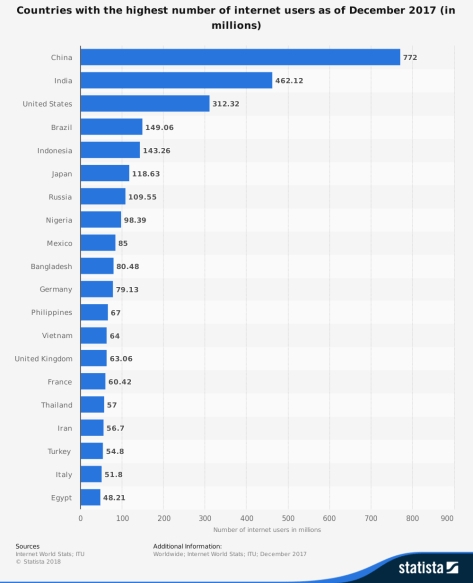
The rate at which data is collected has tremendously increased with the increase in number of internet users around the world. Recent years have seen a boom in Internet of Things (IoT) technology and IOT enabled devices have made it even easier to share data in unprecedented way. Here is an infographic showing how much data is collected every minute.
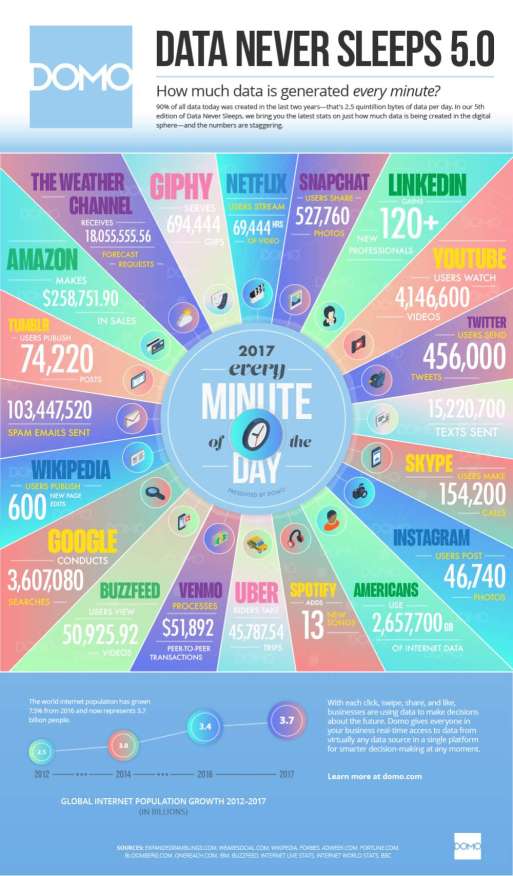
Such amount of data brings problems of storage and difficulty of analysis with it. It is almost impossible for human to make a sense of what the data means. This is where artificial intelligence and machine learning comes into play.
So how does machine learning work? Lets take a scenario, where scientists are trying to develop an algorithm to find the breed of dogs based on its height, weight, ear length, head length, weight, fur type and color. First of all they will need a large amount of data like tens of thousands of data of different breeds with different features , which they will feed into a program to come up with an algorithm that can associate all the features to a specific breed. They will then test the algorithm on another data set. If they get high success rate they deploy the algorithm.
There are different approaches that can be employed to do machine learning like Deep Learning, Decision- Tree Learning, Artificial Neural Networks or Bayesian Networks. Machine learning can be used in different fields like pharmaceuticals, medical diagnosis, search engines, fraud detection, image or voice recognition etc.
My take on Big Data is that it is normal for companies and government to collect data form their consumers or people. In this interconnected consumer driven world companies will compete to provide better services. This will require collecting data from every possible consumer to bring a version 2.0 with better service. Frauds and terrorists are always trying to bypass the security systems so government needs to keep tabs on all the activities online. Similarly, medical diagnosis should not depend on the experience of one doctor but should come from the collective experiences of many doctors and for that all the health information should be collected. With people using FitBits and Apple Watches the amount of health data being collected is ginormous. All these data make us safer, healthier and maker our lives better. But, there is also a danger of such data falling into the hands of wrong people.
I have heard that the thermostats installed in our homes have microphone chips on them, which aren’t necessarily functional. But because such thermostats can be connected to the internet the manufacturer can easily update the system firmware to collect conversations from living rooms. While there are arguments that such recordings will be used to detect break-ins or medical emergency we cannot be 100 percent sure that someone is not listening to our private moments.
 milan101
Leave a comment