Milan Dahal
The sleep machine for the future traveler!
2020 / Class Project
Problem
The future human will travel more than ever. Changing natural resources and technological advances force humans to travel more and more with each passing year. From displacement due to war or natural disasters, to business travel, to long distances marriages, humans are constantly on the go. Wheeled vehicles, boats, planes, and trains, are currently the main methods humans use to get from place to place. However, in the next 50 years, scientists project that interstellar/interplanetary travel will become a possibility. Humans will travel massive distances to visit places literally out-of-this-world. It’s expected that space travel, as well as long-distance earth travel via mostly automated transportation systems, will be common activities for the average human in the next 150 years. With this frequent travel comes a dreaded side-effect: jet lag. Even with transportation becoming faster using technology such as magnetic levitation, crossing time zones (not to mention changing planets) will still cause problems in the future travelers’ sleep schedule. Jet lag is not only a nuisance to all who suffer from it, but it can also have serious physical side effects. According to the Mayo Clinic, jet lag can cause anxiety, constipation, diarrhea, confusion, dehydration, headache, irritability, nausea, sweating, coordination problems, and even memory loss. Our solution, zzZoom, is a device to prevent jet lag by helping the future human traveler get quality sleep in a healthy, non-invasive way.
Timeframe
Elon Musk, the well known inventor and CEO of SpaceX is on the cutting edge of commercial space travel. In the article, Making Humans and Multi-Planetary Species, Musk speculates on the technology needed to only to make space travel possible, but to make it somewhat affordable. The graphic below shows his projected timeline. His projections shows that humans could potential be flying to Mars sometime between 2023 and 2027, a mere 5 years from present day.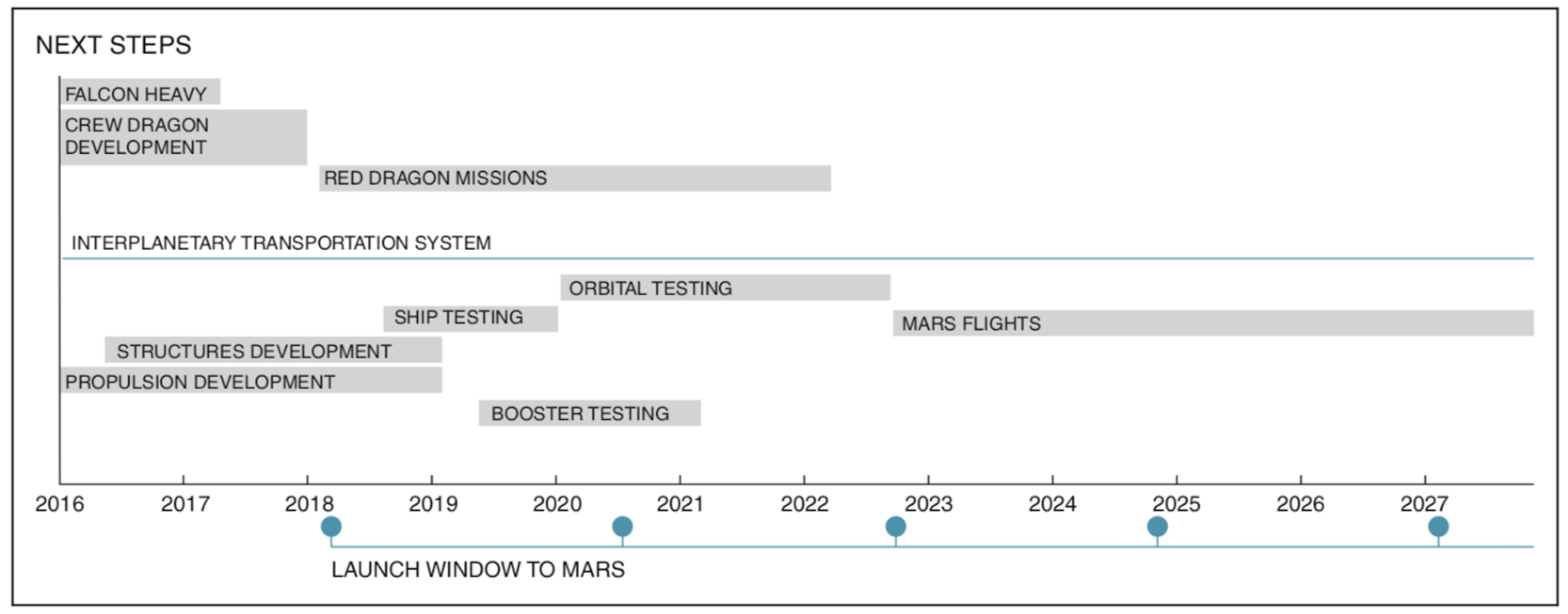
While Musk is confident he will have the technology to make traveling to other planets possible, the question then becomes: Why will the future human be traveling to these planets and will they be able to survive there? It’s easy to speculate on why the future human will need to travel outside the earth, but the technology needed to sustain human life outside of earth is still incredibly underdeveloped. It won’t be for at least another 100 years that space travel becomes commonplace. Therefore, the timeframe for zzZoom will be the next 150-200 years, when interstellar travel, as well as other earthside transportation advancements, become so mainstream that the jetlag they produce is a truly compelling and mainstream problem.
Scope
The Zzzoom design team made the following assumptions when designing this technology:
- The future human circa the year 2200 will have the same basic anatomy and the same physical need for quality and plentiful sleep
- Time, and time zones, will function the same 200 years from now as they do currently
- Transportation will have changed dramatically by the year 2200 to include mostly automated transit as well as space travel, thus increasing the amount of people who travel long distances across many time zones
User Psychology
The future human does not differ all that much from the current human where brain chemistry is concerned. The psyche of the humankind will remain constant, but the external factors that influence that psyche will have drastically changed. Here are the main five psychological characteristics that the zzZoom design team focused on when designing for the human of 2200.
- Ambition: The average human of 2200 will be even more ambitious that ever. The desire to make money, contribute to society, have a family and extensive network of friends, as well as excel in hobbies such as sports and music will be strong in the majority of the human population.
- Overstimulation: In 2200, humans will have more choices than ever before. There will be more of everything: technology to buy, medicines to take, food to eat, vehicles to travel in, people to love, and information to consume. This overstimulation will have a variety of consequences (both positive and negative), such as shortened attention spans, lower frustration thresholds, and an increased need for elegant design.
- Skepticism: With the overstimulation discussed above, humankind will also become increasingly skeptical. Widespread fake news, internet terrorism, and hard to distinguish knock-offs will make humans skeptical of new technology and hesitant to try new things.
- Longevity: With medical advancements such as organ growth, gene manipulation, and improved drugs therapies, the projected lifespan of the human in 2200 could be more than 125 years (check out this cool CNN article about life expectancy). This increased longevity means that humans will have longer to do things (such as work and travel), and will be active much later in life.
- Connectivity: Humans will be connected – both to each other and to the world around them – in ways we currently can’t even imagine. This connectivity will make the world, and the universe, feel smaller, thus eliminating the physical barriers that exist today. This will impact the way the future human thinks about themselves in a global context and will change decisions regarding lifestyle and travel.
Solution
The zzZoom sleep machine is a compact, non-invasive, wearable device targeted for use by the average person of 2200. Utilizing breakthrough haptic, light, and sound technology, the zzZoom sleep machine will help users ages eight and up to sleep in travel scenarios to prevent sleep problems caused by travel.
As discussed in the problem statement and time frame sections, the average human 200 years from now will be traveling with extreme frequency across massive distances. A consequence of this increased travel will be interruptions in normal sleep patterns known as jet lag. Jet lag is not only unpleasant, but has serious side effects. zzZoom is designed to eliminate this problem.
Technical Specifications: Disguised as a normal eye mask used to block light, zzZoom uses three methods to instantly put users into a deep REM sleep, then seamlessly transitions their brain patterns to the correct time-zone, allows the user to sleep for the allotted amount of time, and then gently brings the user back to awakeness. This process can take a little as 10 minutes or as long as 12 hours and achieve the same effect depending on how much time the user has and their desire for traditional sleep.
Powered by the heat given off from the user, the zzZoom sleep machine contains a nanoscale, flexible, semiconductor chip that provides the intelligence for the device. This tiny computer uses neuro processing technology to access thoughts from the user’s brain in order to know what time zone the user is coming from, where they are going, how long they have to sleep, etc.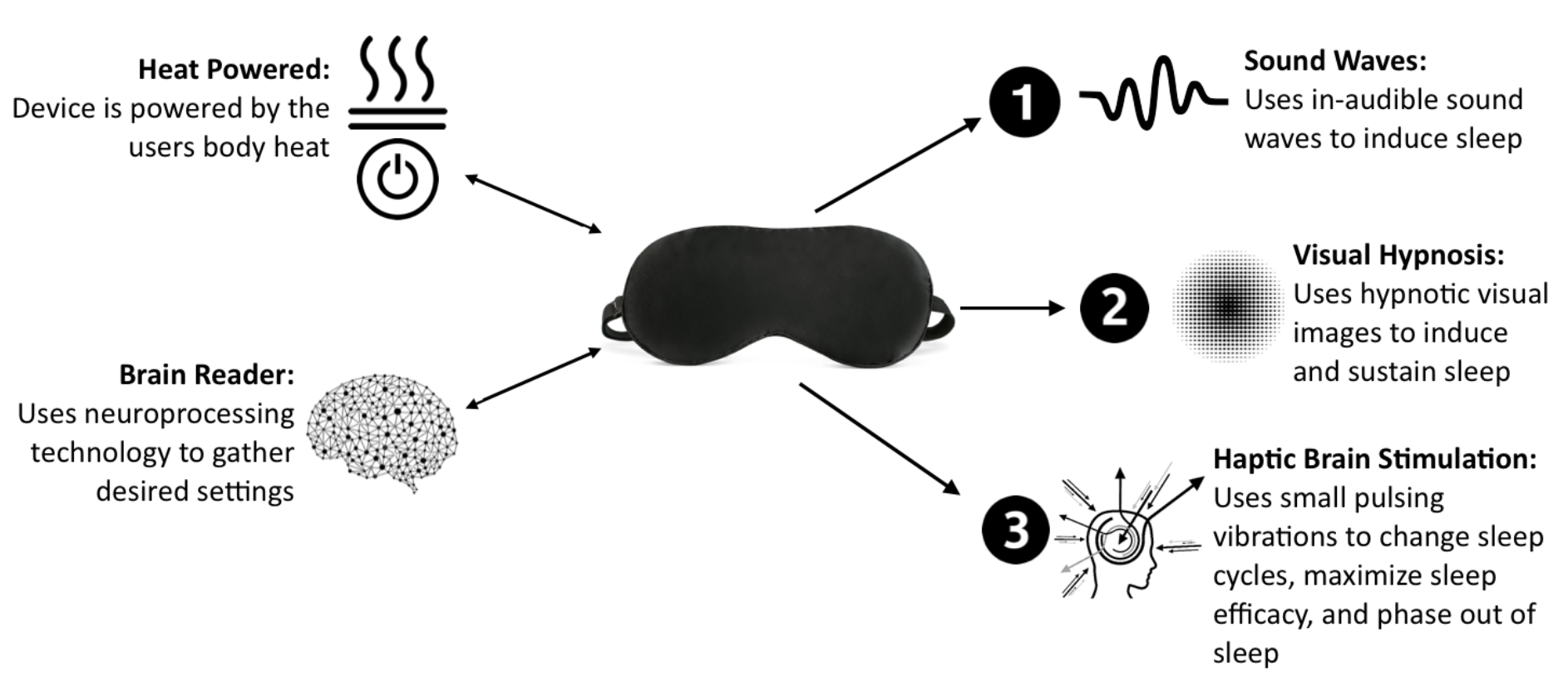
To induce meaningful sleep, the zzZoom sleep machine first generates in-audible sound waves that signal synapses in the brain that it is time to sleep. Next, a flexible OLED display on the inside of the sleep mask outputs hypnotic changes in light patterns that are effective with the users eyes closed (changes in light can be sensed through closed eyes). This not only helps induce sleep, but also helps sustain it. Lastly, small haptic vibrations will radiate through the users skull from the edges of the sleep mask in order to manipulate sleep patterns, change sleep cycles, maximize sleep efficacy, and phase users out of sleep. These haptic vibrations will be generated by an array of hundreds of microscopic weighted motors (similar to those currently used in iPhones but much much smaller).
| Task Step | Identify Operator of Machine | What Information is Required? | What decisions are being made? | What control actions are required? | Identify Operator of Machine |
| Decide if zzZoom is on a human head | User must place zzZoom on head, zzZoom does the sensing automatically | Is the device being worn or not? Senses the body-heat of a human | Is zzZoom on a human head or not? | None, this is a decision step | Definitive decision about if zzZoom is being worn or not |
| If not, then remain off in deactivated state | Automatic | Info already gathered, this is an action | None, this is an action | Remain in deactivated (off) state | Remain in de-activated state |
| If zzZoom is on a human head, then enter activated state | Automatic | Info already gathered, this is an action | None, this is an action | Enter activated state | Enter activated state |
| Check if the device is registered on the solar network system | Automatic | Device’s unique id is tallied with the database on the solar network. | Action step | If the id is matched with an account on the database zzZoom connects to the account | Device gets back information whether it is registered |
| Read information from users account for customized settings | Automatic | What alert system has user put into place? Is there a specific sound/ music user has chosen? | This is information gathering step. | Get the music ready, if user has specified any particular music | All the settings from user account are loaded into the device |
| Read user’s brain for information | Automatic | What time zone is the user coming from What time zone is the user going to How long of a trip is the user on? What else does the user need to accomplish during this travel period How much sleep does the user ideally need? Where is the user in their current sleep cycle? | None, this is an information gathering step | Read information | Gather all pertinent information |
| Analyze information from user’s brain | Automatic | Information is already obtained, this is an analysis step | None, this is an analysis step | Save information based on analysis to inform the duration and manifestation of active phases | Analyze all pertinent information and store data in device to inform future haptic settings |
| Stream the music | Automatic | Does the user have customized settings for music | None, this is an action | Play the music from the speakers | Music starts playing |
| Activate the emergency alert systems in place | Automatic | Does user have specific distress signal set up in the account? Is there a crisis in the vicinity of the user? | None, this is an action | Keep listening to the emergency distress signals | Device is synced with the emergency broadcast system Device is listening to the auditory signals in the surrounding |
| Activate sound waves to lull user to sleep | Automatic | Info already gathered, this is an action | None, this is an action | Activate sound waves | User is asleep |
| Activate visual hypnosis to lull user to sleep and sustain sleep | Automatic | Info already gathered, this is an action | None, this is an action | Activate visual haptics | User is sleeping and will remain asleep |
| Use neurostimulating haptics to change brain patterns and shift to the sleep cycle of the destination. | Automatic | Info already gathered, this is an action | None, this is an action | Activate sleep cycle shift neuro-haptics | Users sleep cycle is shifted from departure location to arrival location |
| The music streaming stops | Automatic | Is user about to reach REM sleep stage? | None, this is an action | Stop the streaming | The streaming is discontinued |
| Transmit quality sleep haptics, and induce deep REM sleep for the time allotted from information gathered from users brain | Automatic | Info already gathered, this is an action | None, this is an action | Activate quality sleep neuro-haptics | User is in deep REM sleep |
| Activate awake haptic after the allotted sleep time has elapsed. | Automatic | Info already gathered, this is an action | None, this is an action | Activate sleep cycle shift neuro-haptics | User is gently awoken |
| Update users sleep information on users information database | Automatic | How long did the user sleep? Were there any anomaly in sleep pattern that might need users’ attention? | None, this is an action | Update the database | Database system sends signal of update completion |
| Decide if zzZoom is on a human head | Human must remove zzZoom from head, zzZoom does the sensing automatically | Is the device being worn or not? Senses the body-heat of a human | Is zzZoom on a human head or not? | None, this is a decision step | Definitive decision about if zzZoom is being worn or not |
| If not, then remain off in de-activated state | Automatic | Info already gathered, this is an action | None, this is an action | Remain in deactivated (off) state | Remain in de-activated state |
| If zzZoom is on a human head, then enter activated state | Automatic | Info already gathered, this is an action | None, this is an action | Enter activated state | Enter activated state |
Interactions
zzZoom is an intelligent device requiring almost no conscious user interaction. To use the device the users simply puts the device on their head and the device automatically puts them to sleep. The device uses neuro processing technology to access the brain function and calculates the required duration time of sleep. It is also connected to the smart alert system that wakes up the user in case of danger or emergency alerts. For example, if the user is sleeping in the area where is there is an earthquake, the alert system gets triggered and user is safely brought to wakefulness. User can also customize the alerting system. For example, a mother with a toddler may program the device to wake her up if her toddler wakes up, leaves the crib.
There are no buttons or any kind of user interface on the device. It activates when put on a human head using temperature and human-brain-function sensor and deactivates when the user puts it off.
Users can create an account on zzZoom network to customize alerts and choose sounds. The users’ account will also be used to sync the device to the users’ calendar, travel itinerary to create sleep plan and store useful sleep data.
Modes
There are two modes of operation. Default and Customized.
1. Default mode
The default mode is activated when there is no customization from users’ end. It is a ready to use device so even without any customization the device will perform the intended task. It decides to operate on default mode if there is no user account associated with the device on Solar Network System.
2. Customized mode
Customized mode is activated when device syncs with the user account on Solar Network System. The smart connection allows the user to track sleep patterns, health and other important information. In this mode user will be able to listen to the chosen music while falling asleep and get the device to bring him/her to wakefulness in user defined scenarios.
Walkthrough
- Walkthrough 1
Simone from Mars. She is a 17 year old student, who is travelling to Earth to visit her grandparents and cousins for a year. Simone, like all Martians,is diurnal. She sleeps on nights and works during the days. A day in Mars is 41 minutes 17.9 seconds longer than a day on Earth. So, Simone will not have a problem in adjusting to the sleeping pattern on Earth. She will get used to the sleep cycle of Earthlings once she lands. She will, however, not have any sense of day or night during the 210 days long journey from Mars to Earth, disrupting her sleep cycle which will affect her psychological and physiological health.
She uses zzZoom to reboot her body every 15 hours by falling asleep. On the ship, she goes to the sleeping chamber to attach herself to the harness, so that her body doesn’t drift around the shuttle while she drifts off. She puts on zzZoom on her head and in no time she falls asleep, listening to popular Martian band Red Wind. This was not the first time she was putting it on.
Her mother bought her zzZoom when she decided to go to Earth. She customized the device with her favorite music to fall asleep to. There is not much customization needed for the device to suit your sleeping needs. It reads users’ brain waves and decides what is best for them.
Simone has programmed the device to wake her up when her name is called more than three times. When the flight crew needs to wake up Simone they are informed to call her name three times and wait for a minute while she comes back to wakefulness.
2. Walkthrough 2

Hagrid is a 30 year old mountaineer. He grew up in New-Zealand and travels all around the world to summit mountains. He has even been to the Moon to summit Mons Huygens. He is vigilant about his health and diet because his adventurous life demands him to be fit. He watches what he eats and exercises regularly, even when on the road. However, while travelling from one country to other he used to get jet lagged and had to spend few weeks to get accustomed. His trainer suggested that he get zzZoom to get proper sleep while travelling.
Hagrid spent two months in the US meeting his sponsors, giving interviews to news channels and fundraising for his charity. He is now heading to Nepal to ascend Mt. Manaslu. On his way he stopped briefly in United Kingdom to meet with one of his sponsors. After the meeting he is now waiting for his connecting flight to Kathmandu. It is 5:17 AM in Heathrow Airport but Hagrid’s biological clock thinks it is 12:17 PM and wants to fall asleep. The rising sun is however messing up with the Suprachiasmatic Nucleus in his hypothalamus suggesting it is time to wake up. He is jet lagged. Before the sleep deprivation affects his health he finds a chair, puts on zzZoom on his head and falls asleep in no time.
Hagrid has synced his zzZoom with his itinerary. Based on his flight schedule zzZoom will wake him up so that he can get ready to board his flight. In 40 minutes, he will wake up fresh with a well-rested brain.
Hagrid thinks zzZoom can be a game changer for him and mountaineers like him while climbing the mountain. In camps they usually spend the night crammed in small tents in extreme weather conditions. If they can get 20 minutes of deep sleep everyday in those harsh conditions they will have more chances of surviving by having complete wakefulness at crucial times when they have to make quick decisions.
Discussion
Even nowadays, innovation in a certain industry would encourage the creation of complementary products. As a design for 2200, there is much more uncertainty. As one of the basic needs of human beings(e.g., air, food, drink, shelter, clothing, warmth, sex, sleep.), we found sleep is a potential subject that could be developed for future human design.
For people who have trouble falling asleep, using sleeping pills, sleep aid device, sleep monitor or sensors could mediate their sleeping condition to some extent. But for those who travel quickly across multiple time zones, jet lag is also an increasing problem. It might cause fatigue and difficulty concentrating, and we do not have an effective treatment for that. The limitation of treatments or side effects of those methods is also undeniable.
Transportation such as automated transit could dramatically reduce the distance between the world. On the other hand, natural resource or climate change might push us to some certain situations that we depend on transportation or travel. We also anticipate breakthrough in haptic, light, and sound technology to support our device.
According to the research, there are many factors, both internal and external, that can influence the quantity and quality of the sleep we obtain. Some environmental factors affecting sleep are light’s effect; jet lag and shift work; pain and so on. Sometimes even sound or air would influence sleep. Rapid eye movement sleep could be sensed and measured to evaluate the sleeping condition. This is one of the reasons that inspire us we to choose a wearable design. Additionally, considering the light and portability for traveling, we set the initial design as a pair of eye mask.
We assumed even with robot assisting, the future human is facing a more competitive and stressful situation than we do. We aim to highly utilize sleeping time, make it accessible and safe for everyone as a wearable design. Our device requires almost no conscious user interaction.However, users could customize wake-up setting and instantly get a deep sleep using the three methods we mentioned above.
Future Directions/Limitations
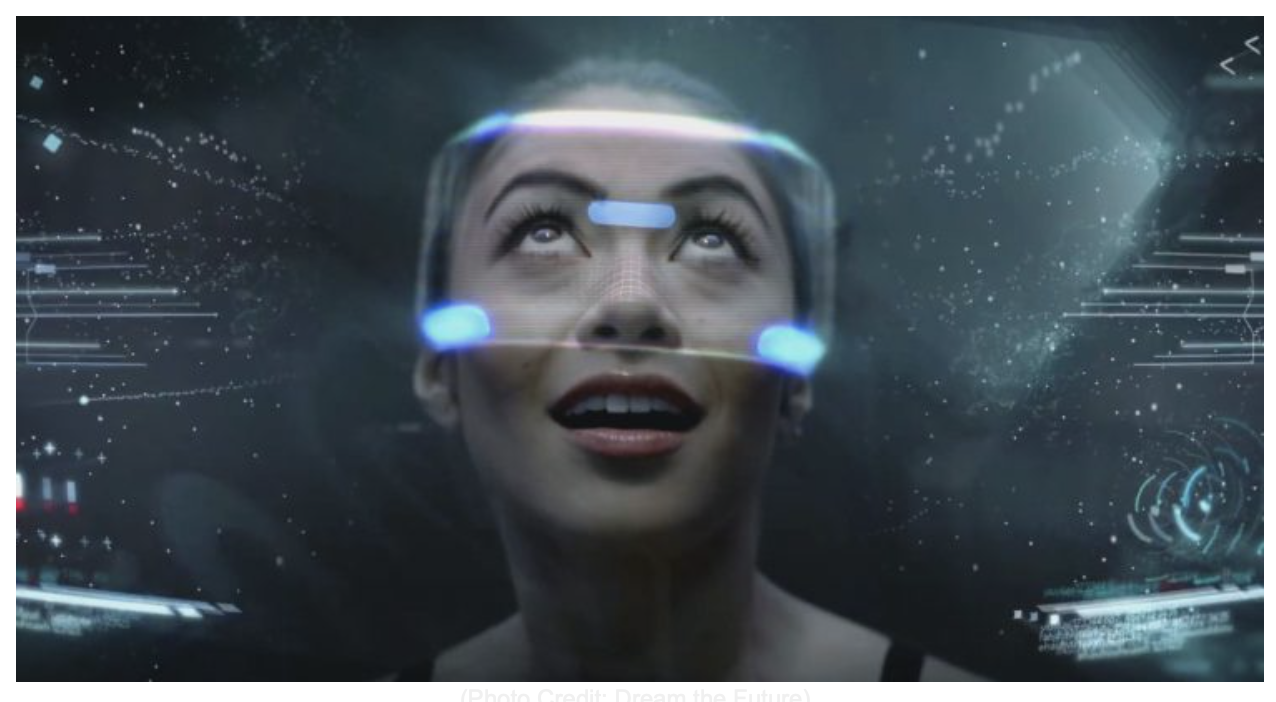
zzZoom is primarily targeted to use during travel. It only lasts 10 minutes or as long as 12 hours. For interstellar travel or even more time-consuming travel, we could explore more future functions for zzZoom such as dream making and working during the dream.
(Photo Credit: Dream the Future)
As a compact, non-invasive, wearable device, zzZoom has some limitation need to more future efforts:
- When used in public space/public transportation
It is reasonable that zzZoom becomes a daily device for the future human. In that case, we need to think about the safety of using it somewhere other than your home. We need to think about the environment.
2. Emergent situation
For now, we have a default setting and customize setting for waking up, also a comprehensive alert system for the emergency. But for 200 years later, we probably need more automatic and humanized way to stop the process, so that our mental status after emergent stop won’t be compromised as well.
3. Security
Anything related to personal data and privacy might be sensitive for the human. No one wants their device been hacked or compromised. But the sleeping data might be useful for different study. It is crucial to decide how to deal with the data and privacy information.
4. Ethical problems and unpredictable change
For such as device, some people might argue zzZoom deprive the power for human naturally fall asleep. For those who can’t afford zzZoom, it might lead to a polarization. Change of living environments such as climate or war may also bring more unpredictable change.
 milan101