Background
After graduating as an electronics and communication engineer I joined Teach for Nepal, a movement to end education inequity in public schools in Nepal. I worked as a math teacher in two government schools for three years and along with improving my students’ math skills I also introduced them to learning with hands. We formed groups and would meet every week to discuss and work on various arts, crafts and science and engineering projects.
Having born and lived in impoverished rural community with no basic facilities my students worked on different projects to solve their daily problems.
Here are some examples of the students’ projects.
Car on a rope!!
The inspiration came from treacherous journey my students had to make every day to come to school. They had to cross the river on a metallic cage that they had to pull to get across. One of my students, Rohit Moktan, came up with this idea of pulling the cage with motors so that it is easier for children, old and sick people to go to the other side of the river.
The project was built using motor, battery, few pieces of wood and a rope.
At first the students were introduced with motors and left to play with it. Rohit came up with this project and built a frame from wooden pieces and mounted a motor on top. When the motor moved so did the frame on the rope.
Later Yogesh came up with design of H-bridge to steer the motor in both directions.

Model cable car
Hand Powered Torch Light
All I did was hand a 9V motor I salvaged from a printer, some wires and an LED to Yogesh Gautam and asked him to see what he could do. He turned the motor wheel and saw the LED glow. What followed was brainstorming into how he could use this new found knowledge into something useful.
He struggled to figure out how to turn the motor fast enough with hands to produce enough voltage to light up the LED. When we discussed gears the other day, he realized what was missing. After a few iterations he came up with this design.
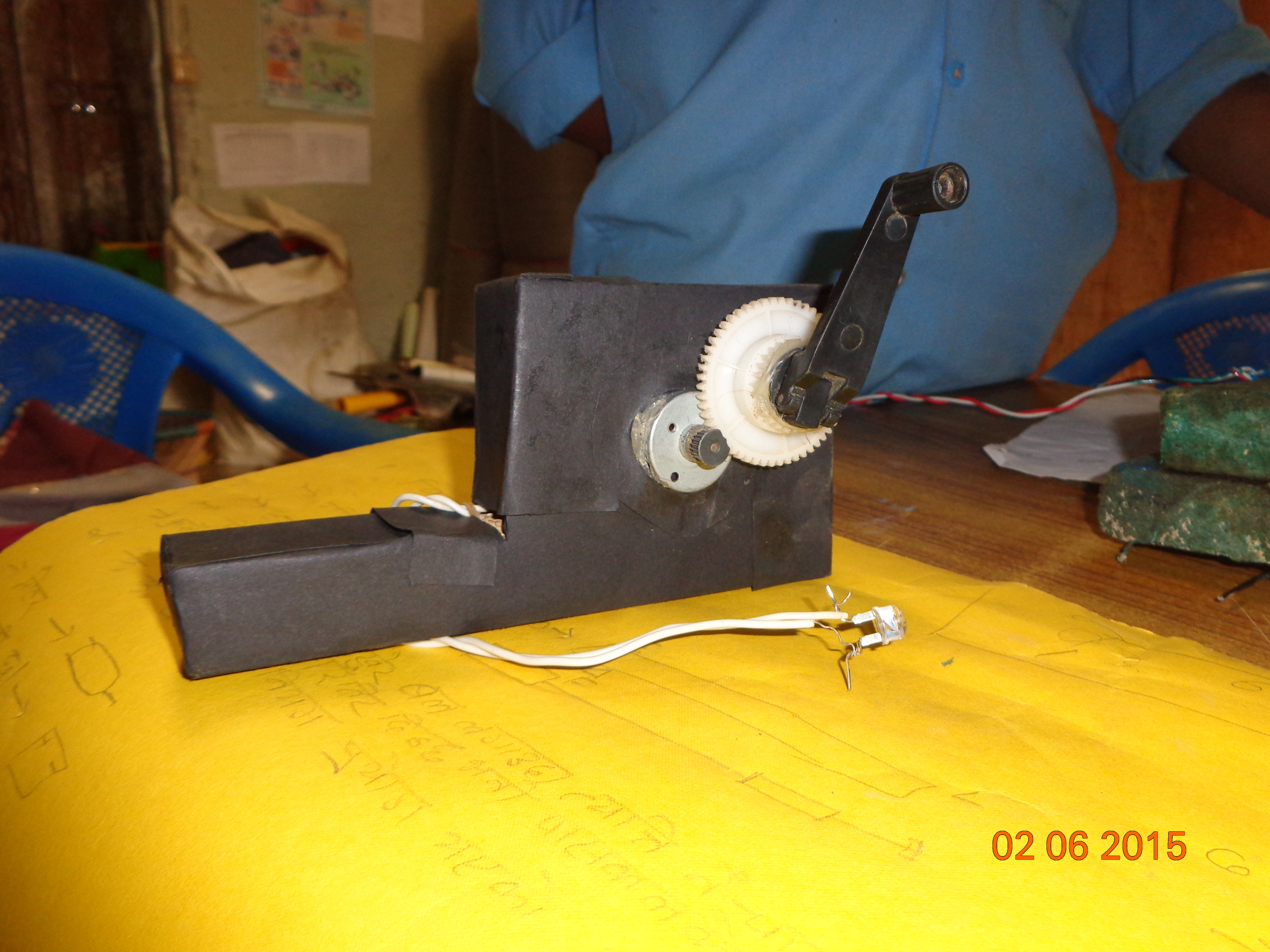
Hand powered torch
The evolution of this project was from understanding how a motor works, how gears work and how to apply that to make a useful product.
Model hydropower generator
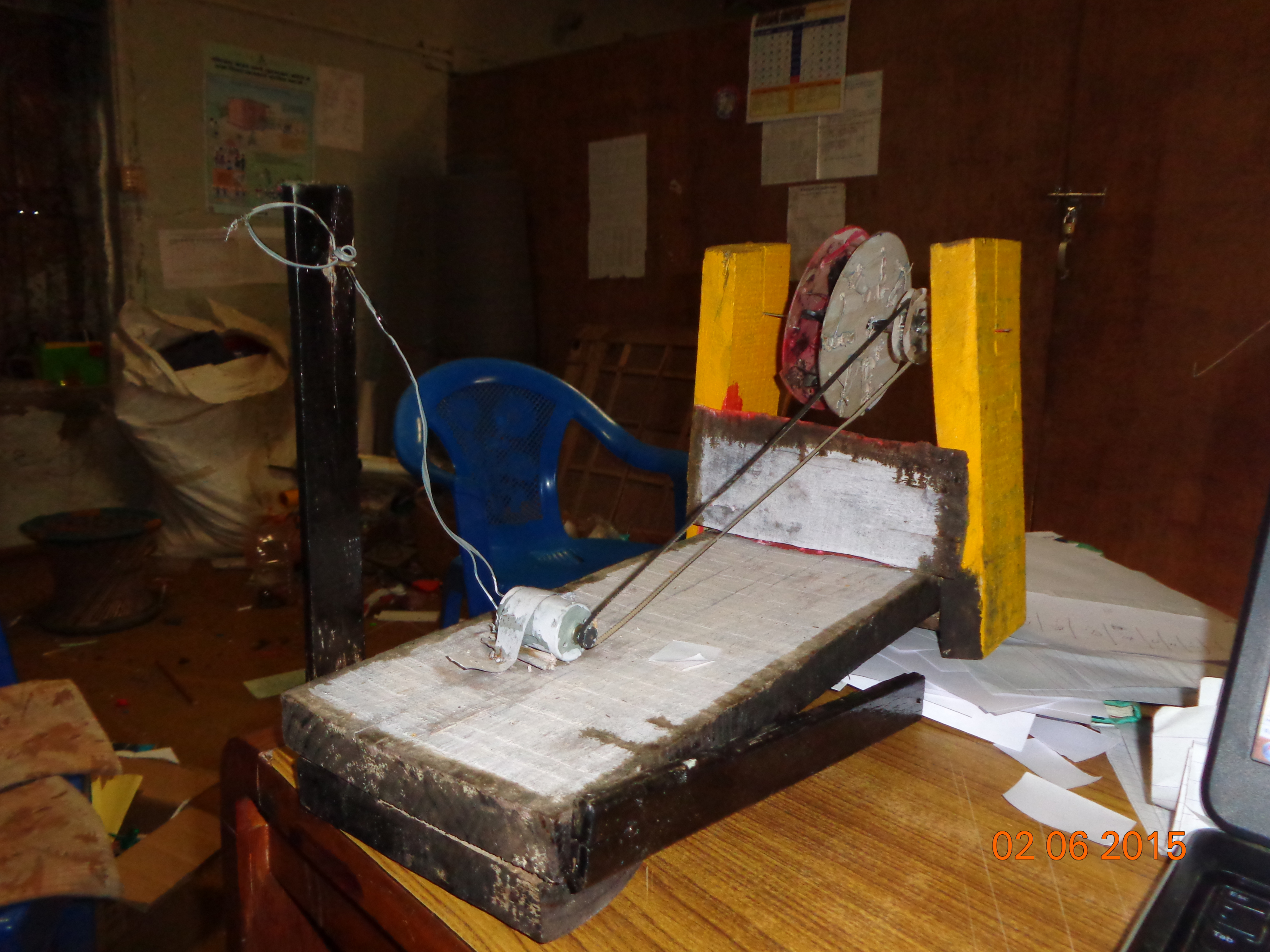
Model hydropower generator
Using another motor from the same printer, a group of students found their way to build a working model of hydropower electricity generator.
Electricity in Nepal used to be plagued with long hours of loadshedding and some parts of villages in places like Ashrang do not have electricity at all.
When the students learned how motors work and how it can be used to generate voltage, they started experimenting with it. The first fan they built was of plastic spoons. It wasn’t as sturdy as they wanted. Then they came up with this plan to cut plastic pipes and heat them up to connect them all together in the shape of fan. The fan was sturdy after securing with wires and two compact disks on both sides. They have also made the use of gear to increase the speed of motor. After lots of trial and error they came up with this final project.
Bamboo Weaving

Making bamboo products is a major source of income for some families. People in villages use baskets, rain coats, backpacks made of bamboo.
This was an art project I did with my students. The objective of this project was to make students aware of the skills it requires to build the bamboo basket, and engage them in fun meaningful making exercise.
The skin of bamboo is taken out using knife. This requires skill of hands. A single long “choya” can be pulled from a long bamboo piece, but it takes a lot of practice. The choya is then interwoven tying with string.
I learned how to weave bamboo baskets from an expert weaver in village. To transfer the knowledge to my students I regularly introduced this age old art and craftsmanship at school. This skill can be a source of income.
Paper Cards

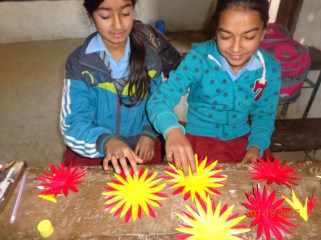
Making paper cards was one of the workshops I had in school during my after school classes. We made different cards: cards with patterns, pop up cards, cards with paintings, cards laced with electronics.
The basic idea with the workshop was to enhance the creativity of children in fun learning activity. Children expressed themselves through the colors and patterns.
 milan101
Leave a comment